As the demand for efficient power solutions grows, the importance of the Axial Piston Hydraulic Motor cannot be overlooked. Experts in the field, such as Dr. John Miller, a leading hydraulic technology specialist, emphasize, "The future of automation will heavily rely on advancements in hydraulic systems." This statement reflects the industry's shift towards optimizing performance and sustainability.
The Axial Piston Hydraulic Motor has become a focal point for innovation. Its design enables superior torque density and compactness, making it an ideal choice for various applications. Buyers in 2026 must consider emerging trends. Features like improved energy efficiency and reduced noise levels will define the market.
However, challenges remain. Not all manufacturers prioritize these advancements equally. Some may innovate in design but neglect reliability or serviceability. Thus, potential buyers should conduct thorough research to identify industry leaders dedicated to consistent quality and innovative practices. Understanding these dynamics is crucial to making an informed decision in the evolving landscape of Axial Piston Hydraulic Motors.
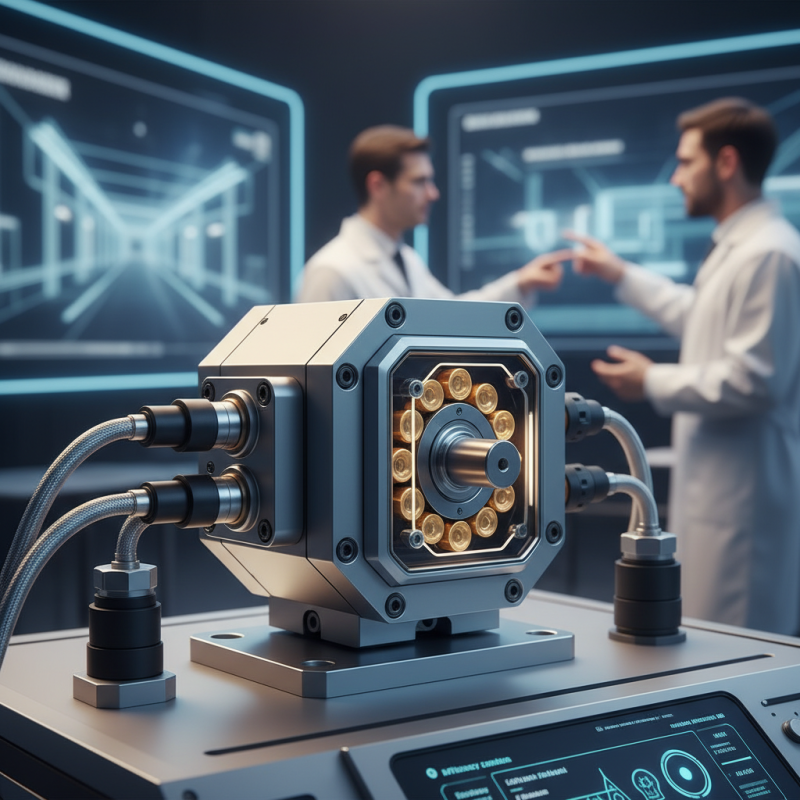
In 2026, axial piston hydraulic motors will undergo significant transformations driven by emerging technologies. According to a recent industry report, the market for hydraulic motors is expected to grow by 7% annually. This growth is largely due to advancements in motor design and materials. More efficient hydraulic systems are becoming critical in various sectors, including construction and manufacturing.
One key trend is the integration of IoT technology. Sensors embedded in hydraulic motors can provide real-time data on performance and maintenance needs. This data-driven approach allows for predictive maintenance, reducing downtime significantly. However, the integration process faces challenges, such as ensuring data security and system compatibility. Companies must address these issues to maximize the benefits.
Additionally, advancements in materials science are paving the way for lighter, stronger components. Engineers are exploring new alloys and composites that offer better durability and efficiency. However, it is essential to evaluate the long-term performance of these materials under harsh conditions. Balancing innovation and reliability will be crucial for manufacturers aiming to stay competitive in the evolving market.
As the demand for axial piston hydraulic motors grows, several key market drivers are influencing buyer decisions. Buyers are increasingly focused on efficiency and performance. Energy efficiency can lead to substantial cost savings. This trend is critical for industries that rely heavily on hydraulic systems.
Moreover, technological advancements play a significant role in shaping buyer preferences. Innovations in design lead to higher durability and reliability. Buyers are looking for motors that minimize maintenance downtime. The transition toward smart technology in hydraulic systems is also noteworthy. Many buyers now prioritize motors that support IoT integration for real-time performance monitoring.
Sustainability is becoming a crucial factor. Eco-friendly options and materials are gaining traction among buyers. However, not all manufacturers meet these environmental standards. This creates a dilemma for buyers who want to balance performance and sustainability. Evaluating a product's environmental impact requires careful research and sometimes difficult choices. Understanding these trends is essential for making informed purchasing decisions in the competitive hydraulic motor market.
In 2026, axial piston hydraulic motors are set to undergo notable innovations. These motors are becoming more efficient and compact. Recent industry reports indicate that energy efficiency improvements have reached up to 15% in some models. This is important as industries strive for sustainability and reduced operational costs.
New designs focus on integrating advanced materials to enhance durability. Research shows that lightweight materials can decrease overall weight without compromising strength. This change targets increased agility in machinery, allowing for better performance in tight spaces. Furthermore, features like integrated sensors are gaining traction. They provide real-time monitoring of performance metrics. This allows companies to react quickly to potential issues, reducing downtime.
However, there are still challenges to consider. Many existing designs struggle with compatibility in diverse environments. This can hinder optimal performance. As technology evolves, addressing these compatibility issues will be crucial. Balancing innovation with functionality remains a focal point for manufacturers. The industry must find solutions that meet both current and future demands.
Sustainability is reshaping the hydraulic motor landscape. As environmental concerns rise, manufacturers face pressure to develop greener solutions. A recent report from the International Energy Agency highlights that hydraulic systems contribute significantly to industrial energy consumption, making innovation crucial.
In 2026, axial piston hydraulic motors must meet more stringent sustainability standards. Key trends include energy efficiency improvements and the use of eco-friendly materials. According to a study by MarketsandMarkets, the energy-efficient hydraulic motor market is projected to grow by 7.5% annually. This shift pushes companies to rethink their designs and production processes.
Challenges remain. Many manufacturers struggle to find renewable materials that maintain performance. This gap raises questions about long-term sustainability strategies. Additionally, integrating advanced technologies like IoT into hydraulic motors can enhance efficiency but may increase costs. Stakeholders must balance these factors to meet evolving market demands while ensuring environmental commitments.
As we look toward 2026, regional market insights play a critical role in shaping the axial piston hydraulic motor landscape. Certain areas are experiencing substantial growth due to industrial expansion and technological advancements. For instance, North America is likely to see a surge in demand driven by increased automation. The shift towards more efficient manufacturing processes calls for high-performance hydraulic solutions.
Meanwhile, Asia-Pacific remains a focal point for growth. Countries like China and India are investing heavily in infrastructure. This creates opportunities for hydraulic motors in construction and agriculture. However, challenges do exist. Supply chain disruptions and fluctuating material costs could impact availability. Buyers must stay informed and adaptable in this evolving market.
Europe is on the brink of innovation. Sustainability is no longer optional; it is a necessity. Manufacturers are under pressure to develop eco-friendly systems. Therefore, the need for energy-efficient solutions is urgent. Keep an eye on how local regulations influence these trends. Buyers should engage with local experts for precise market evaluations. Understanding the regional nuances can lead to better decision-making.
: Expect improved efficiency and compact designs. Some models may see up to 15% energy efficiency gains.
Lightweight materials enhance durability. They lower the weight while maintaining strength and improve machinery agility.
Integrated sensors allow for real-time monitoring. This helps companies quickly identify and resolve performance issues.
Manufacturers struggle with finding renewable materials that perform well. This raises questions about ongoing sustainability efforts.
Stricter sustainability standards push for improved designs. Companies aim for more energy-efficient models to meet rising demands.
Many existing designs do not perform well in diverse environments. This affects overall operational effectiveness.
IoT integration can enhance motor efficiency. However, it may also lead to increased production costs.
The market for energy-efficient motors is expected to grow by 7.5% annually. This reflects increasing demand for eco-friendly solutions.
Finding solutions that meet current and future demands remains challenging. Innovation must not compromise overall motor performance.
The article "Top Trends in Axial Piston Hydraulic Motor for 2026 Buyers" explores the evolving landscape of axial piston hydraulic motors, highlighting several key trends that will influence buyer decisions in 2026. Emerging technologies are rapidly transforming the functionality and efficiency of these motors, while innovative designs and features are enhancing performance and user experience. Furthermore, the analysis delves into significant market drivers that shape purchasing behaviors, alongside sustainability trends that are increasingly important to buyers and manufacturers alike.
Additionally, the article provides regional market insights, detailing growth prospects across different areas. As buyers navigate these developments, understanding the interplay of technology, innovation, and sustainability will be essential to making informed decisions regarding axial piston hydraulic motors.

Weitai Hydraulic