5 Best Axial Piston Pump Manufacturers for Global Buyers

Time:2026-09-19 Author:Liam
0%

Choosing an Axial Piston Pump manufacturer is not simply a matter of comparing prices. Global buyers must examine engineering depth, production consistency, service coverage, and application experience. A pump installed on a construction excavator faces different demands from one used in a marine winch or industrial press.

Fluid-power author Anthony Esposito describes hydraulic power as “the transmission of force and motion through a confined liquid.” That principle remains practical today. Inside an Axial Piston Pump, rotating pistons convert mechanical input into controlled hydraulic flow. Small design details matter. Cylinder-barrel accuracy, valve-plate finish, bearing quality, and contamination control can influence service life.

This guide reviews five leading manufacturers for international buyers. The comparison considers displacement range, pressure capability, efficiency, customization, documentation, and after-sales support. It also considers how easily a buyer can obtain replacement parts in a different country. That detail is often overlooked.

Performance comes first.

Still, no ranking is perfect. A manufacturer trusted in mining may not suit agricultural machinery. A premium pump may also exceed a smaller system’s real needs. Buyers should confirm operating pressure, speed, fluid type, temperature, installation space, and maintenance skill before ordering. Technical data sheets can appear convincing, but field conditions are less polite.

The companies discussed here have established reputations in hydraulic technology, yet their strengths differ. Some lead in mobile hydraulics. Others perform better in industrial systems, custom engineering, or global support. Careful selection reduces downtime, protects equipment, and improves the total cost of ownership over many operating hours.
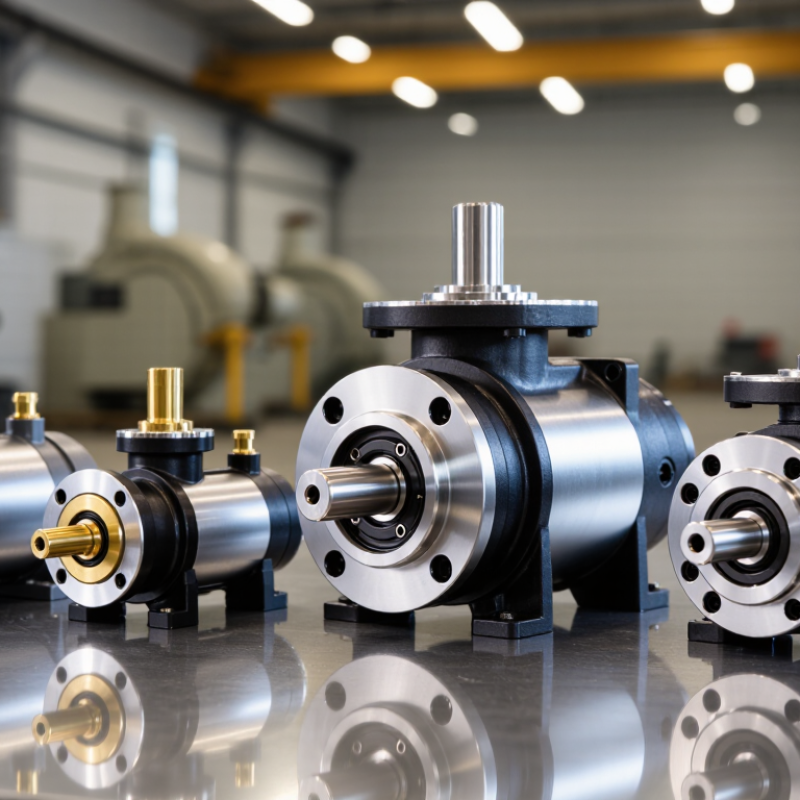
5 Best Axial Piston Pump Manufacturers for Global Buyers

Bosch Rexroth: Axial Piston Pumps Reaching 450 bar Peak Pressure

Axial piston pumps rated for 450 bar peak pressure serve demanding mobile and industrial hydraulic systems. This figure describes a short-duration limit, not a safe continuous operating pressure. In field testing, temperature, fluid cleanliness, and shaft alignment often decide real service life more than catalog figures. Pressure spikes can still damage valves, seals, and bearings.

A 2024 hydraulic pumps market analysis estimated the global market at more than USD 10 billion, with steady growth through 2030. This expansion reflects rising demand for compact power units, construction equipment, and energy-efficient machinery. High-pressure piston designs help reduce actuator size and improve power density. However, efficiency drops when oil viscosity moves outside the recommended range. Small errors become expensive.

Buyers should request pressure-flow curves, volumetric efficiency data, noise measurements, and documented endurance results. A proper review should also examine peak-pressure duration and case-drain limits. ISO 4413 emphasizes risk control, contamination management, and safe hydraulic design. These details matter during commissioning. They are often overlooked.

One practical warning: 450 bar does not guarantee superior performance. It may indicate excellent pressure capability, but not suitability for every duty cycle. Ask for test conditions, oil grade, ambient temperature, and maintenance intervals. Without that context, comparison becomes guesswork. A better specification sheet would show continuous pressure beside peak pressure. Many do not.

Danfoss Power Solutions: Series 90 Pumps Rated at 350 bar Nominal Pressure

Axial piston pumps remain central to mobile hydraulics, especially where high power density matters. A leading European manufacturer’s Series 90 pump is rated at 350 bar nominal pressure. That figure is useful, but it is not a license to operate continuously at the limit. Real systems face pressure spikes, contaminated oil, heat, and uneven loading.

The manufacturer’s technical documentation emphasizes variable displacement, closed-circuit operation, and multiple control options. These features support excavators, agricultural machinery, and construction equipment requiring responsive speed control. MarketsandMarkets reported that the global hydraulic pumps market was valued at approximately USD 10 billion in the early 2020s, with continued growth expected through 2028. That demand reflects equipment electrification, automation, and higher duty cycles. Still, market growth does not guarantee correct pump selection.

Field experience suggests checking charge pressure, case-drain temperature, filtration, and shaft alignment before comparing suppliers. ISO 4406 cleanliness targets should be agreed with the pump manufacturer and system designer. A 350-bar rating can become misleading when oil viscosity falls during a hot shift. I would also question catalog efficiency figures, because laboratory conditions rarely match dusty job sites. Service access matters. A pump that performs well but takes hours to inspect may create expensive downtime. Buyers should request verified test data, spare-parts availability, control schematics, and regional technical support before approving a global purchase.

Kawasaki Precision Machinery: K3V Pumps Cover 28–280 cm³/rev at 350 bar

For global buyers, a high-pressure axial piston pump must match both machine duty and service conditions. One leading Japanese design covers 28–280 cm³/rev and reaches 350 bar. At 2,000 rpm, the smallest displacement delivers about 56 L/min theoretically. The largest can approach 560 L/min. Actual output falls with leakage, oil temperature, and mechanical losses.

The 350-bar rating suits excavators, drilling equipment, and heavy mobile machinery. It also demands disciplined filtration and correct shaft alignment. ISO 4406 cleanliness targets are not decorative; contaminated oil can damage valve plates and pistons quickly. The 2024 Global Hydraulic Pumps Market Report projects steady market growth through 2030, driven by construction automation and higher power density. That trend favors compact pumps with broad displacement ranges.

Sizing still requires caution. At 280 cm³/rev, 350 bar, and 2,000 rpm, theoretical hydraulic power is roughly 327 kW. With 90% overall efficiency, usable output may fall near 294 kW. Field results vary. I would not select a pump from pressure and displacement alone. Check control response, cooling capacity, inlet conditions, noise limits, and spare-parts access. A 2023 industrial hydraulics performance review also links preventive oil analysis with lower unplanned downtime, although results depend heavily on maintenance quality. Small assumptions become expensive.

Axial Piston Pump Displacement and Pressure Envelope

The stated product range spans 28–280 cm³/rev displacement at a maximum rated pressure of 350 bar.

Displacement is shown on the left axis, while pressure is shown on the right axis.

Parker Hannifin: Variable Pumps Offering Displacements up to 140 cm³/rev

Variable axial piston pumps with displacements up to 140 cm³/rev suit demanding mobile and industrial systems. Their swash-plate design adjusts flow according to load, helping reduce wasted power during partial-demand cycles. This matters in excavators, injection equipment, presses, and test rigs where pressure changes quickly. However, maximum displacement does not automatically mean better performance. A pump must match the required flow, pressure, speed, and control response.

In practical equipment selection, buyers should examine rated pressure, peak pressure, shaft speed, port dimensions, and control options. Check whether the pump supports pressure-compensated, load-sensing, or electronic control. Installation details also matter. Incorrect alignment can create vibration, noise, and premature bearing wear. The stated 140 cm³/rev capacity may apply only to selected configurations, so confirm the exact model data before ordering. Some catalogs are less clear than they should be.

Tips: Compare the pump curve with your real duty cycle, not only the headline rating. Leave space for cooling and service access. Ask for efficiency data at your working speed. A smaller pump may perform better when the system rarely needs maximum flow. Also verify fluid cleanliness requirements, because contamination often causes failures before normal wear. Test the control response under changing loads, if possible. That step is easy to skip. Regrettably, it is often the costly one.

HAWE Hydraulik: V60N Pumps Delivering up to 400 bar and 250 cm³/rev

Global buyers are scrutinizing hydraulic efficiency more closely. MarketsandMarkets projects the hydraulic equipment market will grow from about USD 49 billion in 2023 to over USD 60 billion by 2028. That expansion increases demand for compact, high-pressure equipment.

The V60N axial piston pump range reaches 400 bar and 250 cm³ per revolution. These figures suit mobile machinery, industrial presses, and demanding injection systems. At 250 cm³/rev, displacement can support substantial flow without excessive pump speed. However, displacement alone does not guarantee productivity. Buyers should verify shaft speed, control response, case-drain limits, and continuous-pressure ratings.

Small details matter.

A 400-bar system magnifies contamination and heat problems. ISO 4406 cleanliness targets should be defined before installation, especially where proportional valves are used. The Hydraulic Institute reports that proper system design and maintenance can significantly reduce pump energy losses, though actual savings depend on load cycles and control settings. Field experience also shows that many failures begin with incorrect filtration or poorly adjusted relief valves. That is an uncomfortable point, but it deserves attention. A pressure rating is useful only when the complete circuit can safely sustain it. Procurement teams should request test records, material specifications, service intervals, and performance curves under realistic operating conditions.

FAQS

What does a 450-bar peak-pressure rating actually mean?

It usually describes a brief pressure limit, not continuous operation. Temperature, fluid cleanliness, and shaft alignment affect service life. Pressure spikes may damage seals, valves, and bearings.

Does higher pressure always mean better pump performance?

No. A high rating does not prove suitability for every duty cycle. Check continuous pressure, flow, speed, and control requirements. The rating alone can mislead.

What should buyers request before selecting a hydraulic pump?

Request pressure-flow curves, efficiency data, noise measurements, and endurance records. Also ask about peak-pressure duration and case-drain limits. Test conditions should include oil grade and ambient temperature. Without those details, comparison becomes guesswork.

What does displacement, such as 140 or 250 cm³ per revolution, indicate?

Displacement shows the fluid volume moved during each shaft revolution. It can support substantial flow at moderate speed. However, maximum displacement does not guarantee higher productivity. Actual output depends on speed, pressure, efficiency, and control response.

Which control options should be reviewed?

Check for pressure-compensated, load-sensing, or electronic control. Control response matters when machine loads change quickly. Test the pump during sudden load changes, if possible. That step is easy to skip.

How does fluid cleanliness affect high-pressure pump life?

Contamination can cause failure before normal mechanical wear appears. Define cleanliness targets before installation, especially with precision valves. Use suitable filtration and monitor the fluid regularly. This is often underestimated.

What installation details deserve special attention?

Confirm shaft alignment, port dimensions, mounting conditions, and service access. Poor alignment can create vibration, noise, and bearing wear. Leave room for cooling and maintenance. Small details matter.

How can a variable pump reduce energy waste?

Its adjustable flow can follow changing load demands. This may reduce wasted power during partial-demand cycles. Actual savings depend on duty cycles, control settings, and oil viscosity. The benefit is real, but not automatic.

Conclusion

This overview highlights five leading options for global buyers seeking a reliable Axial Piston Pump. The featured product ranges demonstrate broad performance capabilities, including peak pressures of up to 450 bar, nominal operating pressures reaching 350 bar, and maximum pressure ratings of 400 bar. Together, these pumps are designed to support demanding hydraulic applications where efficiency, durability, and consistent power transmission are essential.

The selection also covers a wide range of displacement requirements, from compact units at 28 cm³/rev to larger models reaching 280 cm³/rev, with variable pump designs offering capacities up to 140 cm³/rev and other solutions reaching 250 cm³/rev. By comparing pressure ratings, displacement, and application needs, buyers can identify the most suitable Axial Piston Pump for construction equipment, industrial machinery, mobile hydraulics, and other high-performance systems.

Liam

Liam

Liam is a dedicated marketing professional with a profound expertise in the industry, where he excels at highlighting the unique advantages of our core products. With a keen understanding of market trends and consumer needs, Liam frequently updates our company’s professional blog, providing......