How to Choose an Axial Piston Motor

Time:2026-09-24 Author:Henry
0%

Choosing an Axial Piston Motor is not just a matter of matching a catalog number. The right choice depends on operating pressure, required speed, load, duty cycle, and available space. A motor that performs well on a test bench may behave differently in a machine that runs hot, starts under load, or operates for long shifts. Small details matter.

A useful selection principle is: “Match the motor to the real operating conditions, not just the headline ratings.” This is general engineering guidance, not a verified quotation from a named industry expert. I won’t attribute it to a person without a reliable source. In practice, compare displacement and torque requirements, check pressure and speed limits, and confirm whether the motor suits the hydraulic circuit. Also consider fluid cleanliness, cooling, noise, mounting, and service access. Those details can shape reliability as much as the motor’s rated output.

Before choosing, gather actual system data. Measure pressure and flow during typical operation, including demanding cycles. Review the equipment manufacturer’s specifications, then discuss unusual loads or intermittent duty with a qualified hydraulic engineer or motor supplier. A little uncertainty may remain; real machines rarely behave exactly like spreadsheets. That is a reason to verify assumptions, not to guess.
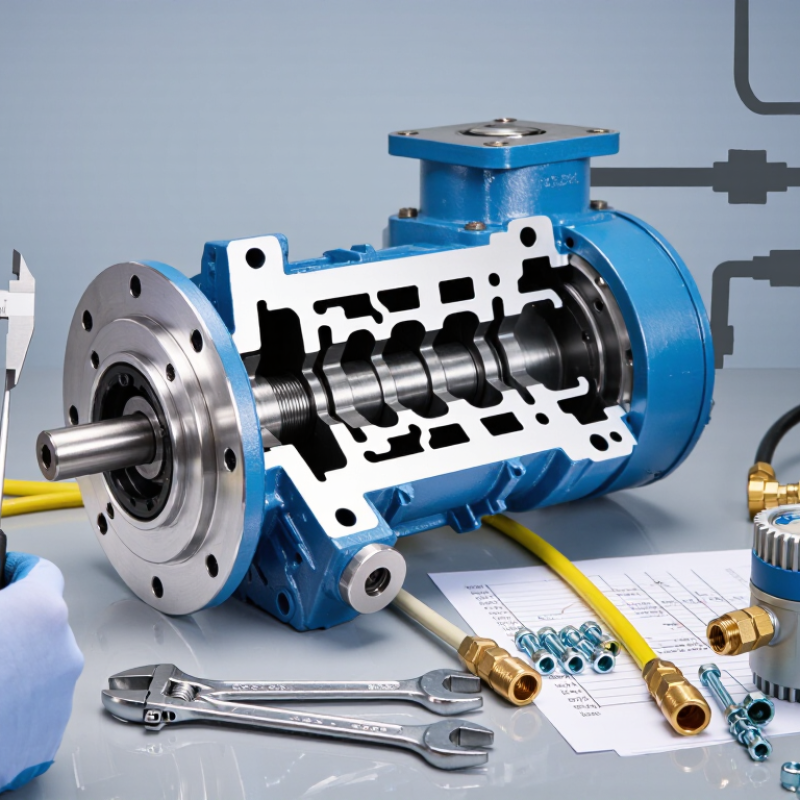
How to Choose an Axial Piston Motor

Establish Required Shaft Speed, Torque, Duty Cycle, and Operating Conditions

How to Choose an Axial Piston Motor

Establish Required Shaft Speed, Torque, Duty Cycle, and Operating Conditions

Start with the driven load, not the motor catalogue. Record the required shaft speed, continuous torque, peak torque, and how long each load lasts. For a rotating drum, note its loaded radius and mass; for a conveyor, include startup resistance. Hydraulic power depends on pressure and flow, while motor displacement links flow to shaft speed. Allow for losses: theoretical values will overstate real output. ISO 4409 specifies methods for testing hydraulic pumps and motors, including flow, pressure, speed, and efficiency. Use manufacturer test data gathered under comparable conditions, rather than treating a rated value as guaranteed performance.

Duty cycle matters. A motor that meets peak torque briefly may overheat during repeated starts or sustained heavy work. Record expected operating hours, reversals, pressure spikes, and ambient temperature. Check case-drain limits, fluid viscosity, and contamination requirements against the motor’s technical documentation. SAE J744 defines mounting and shaft interfaces; matching the interface does not confirm that the motor is correctly sized. A tidy calculation can still miss a real load variation. Recheck assumptions using measured pressure and speed where possible.

Tips: Convert the machine’s actual load into torque and speed at the motor shaft, accounting for gearing and mechanical losses. Keep separate figures for continuous and peak demand. If the duty pattern is uncertain, measure it before choosing; guessing here can produce a motor that performs well on paper but runs hot in service.

Calculate Displacement from Torque: T (N·m) ≈ Δp (bar) × Vg (cm³/rev) ÷ 62.8

When choosing an axial piston motor, estimate displacement from the torque you need: Vg ≈ 62.8 × T ÷ Δp, with T in N·m, pressure difference in bar, and displacement in cm³/rev. For example, 200 N·m at 250 bar requires about 50 cm³/rev ideally. The familiar relationship, T ≈ Δp × Vg ÷ 62.8, is a useful first check, not a guaranteed output figure. Real motors lose torque through friction and leakage. Allow for mechanical efficiency, and use the manufacturer’s performance curve at your operating speed and temperature.

Check the pressure difference across the motor, not just pump outlet pressure. Return-line backpressure reduces the pressure available to make torque. ISO 4409:2019 specifies methods for testing hydraulic pumps and motors under steady-state conditions; its test framework is a useful reference when comparing published displacement, flow, and efficiency data. In practice, verify the numbers against the test conditions. A motor rated at one pressure may deliver less torque when hot oil thins or inlet flow falls. That detail is easy to miss.

Then check speed, continuous pressure rating, and case-drain limits. A 50 cm³/rev motor at 1,500 rpm needs roughly 75 L/min before leakage allowance. A small displacement increase can raise torque, but it also raises required flow at the same speed. I would not size from the equation alone; it is a clean calculation, and real machines are less tidy.

Compare Continuous and Peak Pressure Ratings; Many Designs Operate Around 250–450 bar

When choosing an axial piston motor, compare continuous and peak pressure ratings, not just the largest number on a product sheet. Many designs operate around 250–450 bar, but this range is not a promise of equal performance at every pressure. Continuous pressure is the level a motor can handle during sustained operation under specified conditions. Peak pressure usually applies only briefly, such as during a sudden load change.

That difference matters in the field. A motor driving a loaded conveyor may run for hours near its working pressure, while a log splitter can create short pressure spikes when the tool meets resistance. Check how long the stated peak is permitted, and how often it can occur. Also confirm pressure limits against operating speed, fluid temperature, and inlet conditions. Heat builds quickly. A rating measured with cool, clean oil may not match a hot system with restricted flow.

Look at the actual duty cycle and leave a sensible margin below the continuous limit. Pressure gauges can reveal spikes that a steady reading misses; a suitable sensor may be needed for brief events. I have seen selection decisions lean too heavily on peak figures. That is easy to do, and worth questioning. Read the motor’s operating documentation, then compare its pressure limits with the system relief setting and expected load changes.

Choose Fixed or Variable Displacement to Match Speed Control and Energy Needs

Choosing fixed or variable displacement starts with the load. A fixed-displacement axial piston motor delivers a consistent volume per shaft revolution. It suits steady-duty equipment, such as a conveyor running at nearly constant speed. Its control system may need throttling or flow adjustment when demand changes. That can waste energy as heat. Simple, predictable operation matters.

A variable-displacement motor changes output per revolution, helping match speed and torque to changing work. On a mobile machine, an operator can slow travel without forcing the same oil flow through a restriction. More control, more complexity. The U.S. Department of Energy’s 2006 Improving Pumping System Performance sourcebook reports that properly applying adjustable-speed control can reduce energy use in suitable pumping systems, with savings depending on operating conditions. That finding concerns pump systems, not axial motors specifically; treat it as context, not a guaranteed motor saving. For selection, compare the duty cycle, required low-speed torque, pressure range, and time spent at partial load. A variable unit may be worthwhile when demand varies often, but its added controls and cost need justification. Real machines are rarely ideal. Measure the actual cycle, then check manufacturer performance curves and hydraulic-fluid temperature under load.

How to Choose an Axial Piston Motor - Choose Fixed or Variable Displacement to Match Speed Control and Energy Needs

Selection Factor Fixed-Displacement Motor Variable-Displacement Motor What to Check Before Choosing
Displacement Displacement remains constant during operation. Displacement can be adjusted within the motor’s designed operating range. Compare the required torque and speed range with the motor’s displacement and pressure ratings.
Speed Control Speed is primarily controlled by changing hydraulic flow. Speed can be adjusted by changing displacement, flow, or both, subject to system design. Determine whether the application needs frequent speed changes or a broad operating range.
Torque Characteristics At a given pressure difference, torque is broadly proportional to displacement. Changing displacement changes the motor’s torque and speed characteristics. Confirm starting torque, continuous torque, peak load, and pressure limits with the technical data sheet.
Energy Use May require additional flow-control components when the load needs variable speed; throttling can create losses. Can help match motor output to changing demand, but actual energy use depends on controls, operating conditions, and system efficiency. Assess the full hydraulic circuit, including pump control, valve losses, duty cycle, and return-line pressure.
System Complexity Usually offers a simpler control arrangement for applications with steady operating requirements. Requires suitable displacement-control hardware and control logic. Consider installation space, control interfaces, commissioning, and maintenance capabilities.
Typical Fit Useful where operating speed and load are relatively consistent and straightforward control is preferred. Useful where speed, torque, or operating conditions vary and adjustable displacement is beneficial. Base the choice on the actual duty cycle rather than the application label alone.
Efficiency Considerations Efficiency depends on speed, pressure, leakage, fluid condition, and how flow is controlled. Efficiency also depends on displacement setting and control strategy; variable displacement does not guarantee lower energy use in every system. Request performance maps at the intended pressure, speed, displacement, and fluid temperature.
Operating Limits Must remain within rated pressure, speed, temperature, and case-drain limits. Must meet the same operating limits, as well as any minimum-displacement and control-pressure requirements. Check continuous and intermittent ratings, inlet conditions, fluid cleanliness, and manufacturer-specified case pressure.
Practical Decision Choose when fixed output characteristics meet the operating requirements and simplicity is a priority. Choose when controllable displacement is needed to meet changing speed or torque requirements. Verify motor sizing and control compatibility with the pump, valves, load, and intended operating cycle.

Verify Rated Speed, Fluid Viscosity, and Case-Drain Limits Against the Motor Datasheet

How to Choose an Axial Piston Motor

Before selecting an axial piston motor, check its rated speed against the machine’s actual operating cycle. A motor may tolerate a stated maximum speed only under specific pressure and flow conditions. Compare the datasheet’s continuous and intermittent ratings with your expected load, not just the fastest moment. Leave operating margin. A conveyor that runs steadily may need a different speed range than equipment that starts and stops under heavy load.

Fluid viscosity matters, too. Check the datasheet’s recommended viscosity range at both startup and normal operating temperature. Cold oil can resist flow, while hot, thin oil may reduce lubrication. A practical check is to record the reservoir temperature after a full work cycle, then compare it with the fluid guidance. I once focused too much on nominal flow and overlooked cold starts. That was a useful reminder.

Finally, verify the case-drain limits, including allowable pressure and flow. The drain line should be routed and sized to meet the motor’s stated limits, with restrictions and fittings considered. A small kink or undersized return line can raise case pressure. Check the figures under the conditions the datasheet specifies; limits may change with speed or fluid temperature. If a value is unclear, confirm it with a qualified hydraulic technician before installation. It is easy to miss.

FAQS

What information should be collected before choosing an axial piston motor?

Record shaft speed, continuous torque, peak torque, duty duration, reversals, pressure spikes, and ambient temperature. Measure the real load. Include gearing, radius, mass, and mechanical losses.

How is motor displacement estimated from torque and pressure?

Use Vg ≈ 62.8 × T ÷ Δp. T is torque in N·m, pressure is in bar, and displacement is in cm³/rev. For 200 N·m at 250 bar, the ideal displacement is about 50 cm³/rev. It is only a starting estimate.

Why should pressure difference be checked across the motor?

Motor torque depends on pressure difference across the motor, not outlet pressure alone. Return-line backpressure reduces available torque. Hot oil and restricted inlet flow can reduce performance further. That detail gets missed.

How should continuous and peak torque be treated?

Keep separate figures for continuous torque and short peak torque. A motor may survive a brief peak but overheat during repeated starts. Check operating hours and load duration carefully. Paper performance can mislead.

How is hydraulic flow related to motor speed?

Flow roughly equals displacement multiplied by rotational speed. A 50 cm³/rev motor at 1,500 rpm needs about 75 L/min before leakage allowance. Higher speed requires more flow. Losses still matter.

When is a fixed-displacement motor suitable?

A fixed-displacement motor suits steady loads with nearly constant speed and torque. It offers predictable operation and simpler control. Changing speed may require flow adjustment or throttling. That can create unwanted heat.

When should a variable-displacement motor be considered?

Consider one when speed, torque, or load changes frequently. It can reduce unnecessary flow restriction during partial-load work. Controls become more complex and costly. The benefit needs proof.

What operating conditions must be checked before final selection?

Check pressure ratings, maximum speed, case-drain limits, fluid viscosity, contamination control, and oil temperature. Use performance curves from comparable conditions. Measure pressure and speed when possible. I would not trust the equation alone.

Conclusion

Choosing an Axial Piston Motor starts with defining the required shaft speed, torque, duty cycle, and operating conditions. Use the torque relationship T (N·m) ≈ Δp (bar) × Vg (cm³/rev) ÷ 62.8 to estimate the displacement needed for the available pressure and load. Then compare the motor’s continuous and peak pressure ratings with the system’s operating demands; many designs operate in the range of 250–450 bar, but the appropriate rating depends on the application.

Next, decide whether fixed or variable displacement best suits the required speed control and energy use. Before selecting a motor, verify its rated speed, acceptable fluid viscosity, and case-drain limits against the datasheet. Matching these specifications to the application helps ensure suitable performance and reliable operation throughout the expected duty cycle.

Henry

Henry

Henry is a dedicated marketing professional with a profound expertise in the company's offerings. With years of experience in the industry, he possesses an impressive understanding of the market dynamics and consumer behaviors that drive success. Henry is committed to sharing his insights through......