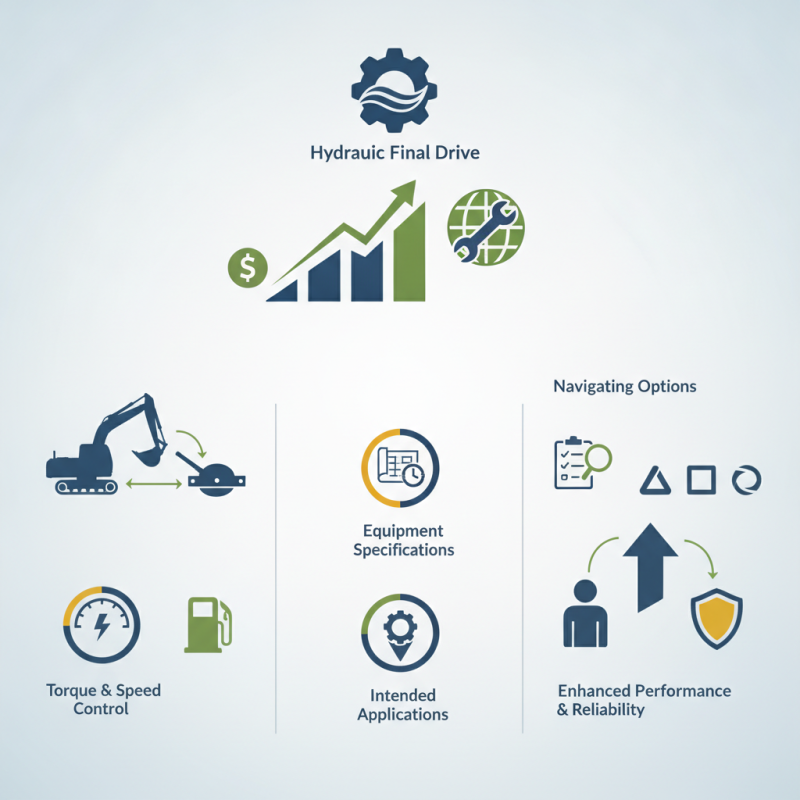
Choosing the right Hydraulic Final Drive is crucial for equipment efficiency. The global market for hydraulic drives is projected to reach $14.2 billion by 2025, according to Market Research Future. This growth highlights the importance of selecting a drive that fits specific needs.
Hydraulic Final Drives are essential for various machinery, such as excavators and compactors. They provide reliable torque and speed control. Studies show that an appropriate Hydraulic Final Drive can improve fuel efficiency by up to 15%. Selecting the right model involves understanding your equipment's specifications, operational demands, and intended applications.
However, navigating the options can be challenging. Many buyers overlook critical factors like duty cycle and environmental conditions. Experts recommend evaluating multiple brands and models to identify the best fit. With thoughtful consideration and expert advice, you can make an informed decision that enhances performance and reliability.
Hydraulic final drives are critical components in various machinery. They convert hydraulic energy into rotational motion. This feature makes them valuable in applications like excavators and compactors. Understanding how they function helps in selecting the right type for your needs. Low-speed, high-torque operations are what these drives excel at.
In construction, precision is crucial. A hydraulic final drive enables smooth movement and accurate controls. It empowers operators to handle tough terrains. However, not all drives are equal. Factors like load capacity and operational speed must be considered. If these aspects are overlooked, it may lead to inefficient performance or equipment failure.
Evaluating your specific application is vital. Does your machine require high torque or speed? Knowing this will guide your choice. Additionally, assess the environment where the equipment will operate. Rough terrains may necessitate a more robust design. Reflecting on these details ensures you invest wisely in a hydraulic final drive that meets your operational demands.
Choosing the right hydraulic final drive can be overwhelming. Understanding key specifications is essential for making informed decisions. One crucial factor is torque. It determines the drive's power and effectiveness. A higher torque value typically means better performance for heavier loads. But, be mindful of your system's overall capabilities. Overloading can lead to failures.
Another important specification to consider is the hydraulic flow rate. This impacts the speed and responsiveness of the drive. A balanced flow rate ensures smooth operation without compromising efficiency. Additionally, check the compatibility with existing hydraulic systems. An incompatible unit can cause operational issues and lead to costly repairs.
Don’t forget about the physical dimensions and mounting options. Proper fit is essential for seamless integration. Measure the space available and make sure the new drive will fit. Some users overlook this aspect. Reflecting on your specific application will guide your selection. Each project has unique requirements that must be considered. Take your time to evaluate these details.
When selecting a hydraulic final drive, performance metrics are crucial. Torque, speed, and efficiency ratings significantly impact your equipment's effectiveness. Torque determines how much rotational force the drive can produce. For heavy-duty tasks, a higher torque rating is essential. It allows for better handling of challenging terrains and heavier loads.
Speed is another vital factor. It influences how quickly your machinery can operate. Fast speed improves productivity, but it must not compromise torque. Finding a balance between the two is key. Efficiency ratings indicate how well the drive converts hydraulic energy into usable power. A higher efficiency means lower fuel consumption, which saves costs in the long run.
Tips: Always assess the specific needs of your project. Not every job requires maximum torque or speed. You may need a drive that excels in efficiency instead. Regularly review performance reports to ensure you are using the right drive for your needs. Monitor usage patterns to identify areas for improvement. Reflect on past experiences to avoid repeating mistakes. Every calculation counts in making a wise investment in hydraulic drives.
This chart illustrates the performance metrics of various hydraulic final drives, comparing torque, speed, and efficiency ratings across four different models. This helps in visualizing the strengths and weaknesses related to each model in a clear manner.
When selecting a hydraulic final drive, evaluating the manufacturer’s reliability is crucial. A recent industry report revealed that 75% of machinery failures can be traced back to inadequate support from manufacturers. This statistic emphasizes the need for a dependable partner in hydraulic drive systems. Research suggests that a company’s response time to inquiries is a key indicator of reliability. Manufacturers that respond within 24 hours typically maintain higher customer satisfaction rates.
Additionally, look for those who provide comprehensive technical support. A survey showed that 65% of users prefer manufacturers that offer training sessions. This training helps operators understand system capabilities and minimizes operational downtime. It's also essential to consider warranty lengths and service options. A longer warranty can indicate the manufacturer’s confidence in their product. However, never overlook reviews and case studies. Real-world performance will often provide a clearer picture than promotional materials.
Evaluating a manufacturer’s history can also reveal their commitment to quality. Transparency in their supply chain and part sourcing is often a good sign. An evident pattern of compliance with industry standards shows reliability. In examining these factors, remember that your final choice can significantly impact operational efficiency and maintenance costs in the long run. Consider each aspect carefully to ensure you select the best hydraulic final drive for your needs.
When considering a hydraulic final drive, the cost-benefit analysis is crucial. Investing in quality parts often leads to better performance and longevity. Quality options usually have enhanced durability, which can reduce downtime. For heavy machinery, reliability translates to consistent productivity. On the other hand, budget options might seem appealing initially. But, they often come with hidden costs, such as frequent repairs and replacements. This pattern can quickly eat into any initial savings.
It's essential to evaluate your specific needs. A more expensive final drive might be the right choice for high-demand applications. If your machinery works long hours under tough conditions, quality is vital. Alternatively, in lighter use cases, budget options could suffice. Yet, cheaper alternatives often compromise on efficiency. Therefore, meticulously considering the long-term impacts of your choice is vital.
Some might focus solely on immediate costs. This shortsightedness can lead to regret when equipment fails. Think critically about the trade-offs involved. Consider factors like warranty, availability of parts, and customer support. These elements also contribute to the overall value of your investment. Quality and reliability are paramount to ensuring that your equipment does not let you down when you need it the most.
: Hydraulic final drives convert hydraulic energy into rotational motion. They are essential in various machinery applications.
Performance metrics like torque, speed, and efficiency affect equipment effectiveness. They guide users in choosing the right drive.
Torque determines rotational force. Higher torque helps with heavy-duty tasks and challenging terrains.
Consider load capacity, operational speed, and the terrain. These aspects ensure efficient performance for your application.
Budget options may seem appealing but can lead to hidden costs. Frequent repairs may outweigh initial savings.
Higher efficiency means better energy conversion and lower fuel consumption. This leads to cost savings over time.
Balance is key. Fast speed improves productivity, but it shouldn’t compromise the necessary torque for your tasks.
Reflecting helps identify mistakes. It aids in making better choices for future equipment needs.
Consider factors like warranty and parts availability. These elements are crucial for a reliable investment.
Regularly reviewing performance reports and adjusting your selection is important. This keeps your equipment aligned with project needs.
When selecting the best Hydraulic Final Drive for your needs, it's essential to understand their operational principles and various applications. These drives convert hydraulic energy into rotary motion, making them vital in construction, agriculture, and various machinery. Key specifications to consider include torque, speed, and efficiency ratings, which directly influence the performance of the equipment.
Additionally, evaluating the reliability and support offered by manufacturers is crucial to ensure long-term satisfaction with your Hydraulic Final Drive. A thorough cost-benefit analysis will help you determine whether to invest in a high-quality option that offers durability and performance or consider budget alternatives that may meet your immediate needs. Balancing these factors will lead to a well-informed decision tailored to your specific operational requirements.

Weitai Hydraulic