Choosing the best China Travel Motor Factory requires more than comparing prices online. Global buyers need verified engineering, stable production, and clear communication. A reliable factory should explain motor displacement, rated torque, operating pressure, and application limits in practical terms. These details matter when a travel motor powers an excavator on a muddy construction site or a tracked drilling machine on uneven ground.
Look for manufacturers with documented quality procedures and experienced hydraulic engineers. Factory visits, sample testing, and inspection reports can reveal more than polished brochures. Ask whether each motor receives pressure testing, noise checks, and dimensional inspection before shipment. Spare parts availability also matters, especially when equipment operates far from major service centers. Good suppliers provide drawings, installation guidance, maintenance advice, and responsive technical support.
Still, no single manufacturer is perfect for every buyer. Some factories offer strong customization but need longer production times. Others deliver quickly but provide fewer engineering options. This trade-off deserves honest evaluation. Buyers should verify certifications, export experience, warranty terms, and references from comparable industries. A trustworthy China Travel Motor Factory will not avoid difficult questions. It will explain limitations clearly and recommend a suitable model instead of forcing a sale.
Performance matters most. Claims require evidence. A careful sourcing process helps global buyers reduce downtime, control long-term costs, and build a more dependable supply chain.
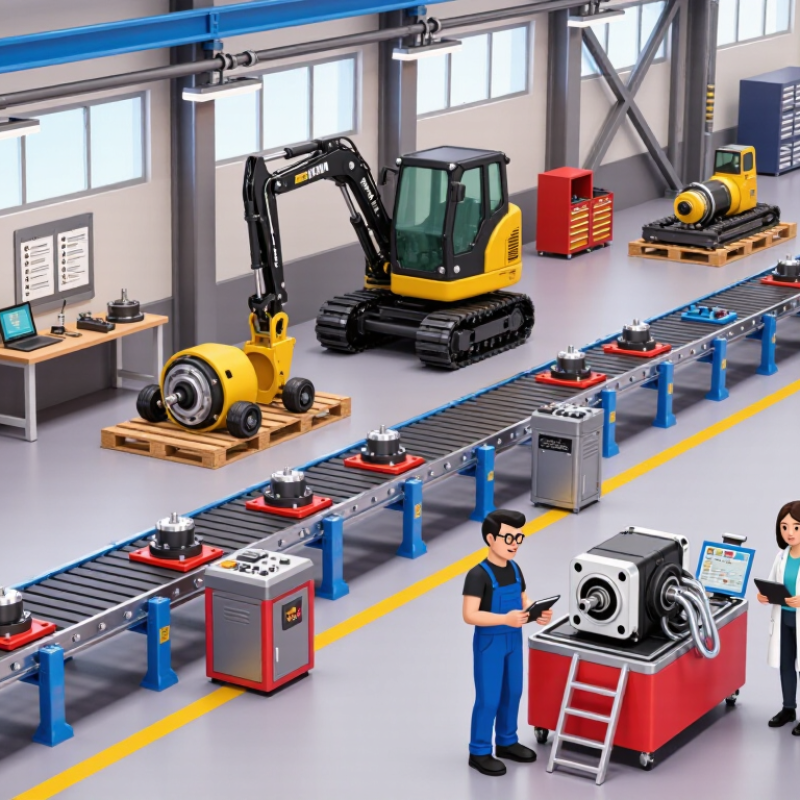
A travel motor is a hydraulic final-drive unit that moves an excavator, crawler carrier, or other tracked machine. It converts pressurized oil into controlled torque at the sprocket. Inside, a planetary gearbox reduces speed and increases pulling force. Small errors matter. Incorrect displacement can cause weak travel, overheating, or uneven tracking.
Factory choice matters because reliability depends on more than machining accuracy. According to Off-Highway Research’s 2024 outlook, global construction equipment demand remains above one million units annually. That scale increases pressure on replacement parts and after-sales support.
A qualified factory should control heat treatment, surface hardness, seal selection, and cleanliness during assembly. It should also provide load testing, pressure records, and traceable inspection data. ISO 4413 guidance supports disciplined hydraulic-system design, but certification alone cannot prove every unit performs well.
Ask for test curves, not only catalog promises. Check whether the motor maintains torque under cold starts, contaminated oil, and repeated reversing. These conditions resemble a crawler working on wet clay or crushed stone. Factory audits should review calibration records and batch consistency. Yet no audit is perfect. A supplier may pass one inspection and still struggle during rapid production growth. Buyers should sample units independently and compare noise, leakage, case-drain flow, and travel speed. The best decision is rarely the lowest quotation. It is the factory that can explain failures clearly and correct them quickly.
Choosing the right travel motor manufacturer requires more than comparing online prices. A reliable evaluation begins with technical fit, production control, and communication. Request detailed drawings, displacement data, rated torque, operating pressure, and mounting dimensions. These details should match your excavator, crawler, or tracked platform.
Visit the factory when possible. Watch machining, assembly, sealing, and final testing. A clean workshop helps, but it proves little alone. Ask to see test records from actual production batches. Check whether components have traceable inspection reports. Review material controls, heat treatment procedures, and pressure testing methods. Experienced engineers should explain failure risks without hiding uncomfortable details.
I once focused too heavily on price. That decision created delays through unclear tolerances and slow technical replies. Now, I also examine sample consistency, packaging, warranty terms, and spare parts support. Ask how the manufacturer handles leakage, abnormal noise, or reduced travel speed. Request references from similar applications, not only general customer comments. Regional conformity documents and export experience also deserve attention. A factory may pass one audit and still struggle with long-term support. Leave room for that possibility. Clear drawings, realistic lead times, honest limitations, and written inspection standards usually reveal more than polished sales language.
Choosing a travel motor factory requires more than comparing price and catalog photos. Buyers should verify rated pressure, peak pressure, displacement, speed range, and starting torque. These figures must match the excavator’s actual weight and working conditions. Ask for performance curves, not isolated numbers.
A reliable factory should operate a documented quality system, such as ISO 9001, with certificates covering the correct production site. Check material certificates, heat-treatment records, and batch traceability for shafts, bearings, and gear components.
Request test reports showing leakage, efficiency, noise, temperature rise, and endurance results. Testing should use the recommended hydraulic oil and realistic pressure cycles. Otherwise, the data may look impressive but prove little.
Check cleanliness control carefully. Contaminated hydraulic oil can damage a motor before visible failure appears. Ask whether the assembly area follows a defined cleanliness limit, such as ISO 4406 guidance.
Confirm seal compatibility, port dimensions, mounting tolerances, and corrosion protection. For export equipment, verify applicable conformity documents and country-specific requirements before shipment.
A factory audit should include calibration records and random sample testing. A polished certificate is not enough.
I would also inspect rejected parts and repair logs. They reveal recurring weaknesses more honestly. No supplier is perfect, and ignoring small quality deviations can create expensive field problems later.
Selecting China’s best travel motor factory starts with engineering evidence, not attractive catalog photos. Grand View Research valued the global hydraulic equipment market at about USD 49 billion in 2023. Demand is strong, but market size does not guarantee quality.
In practical sourcing, customization begins with the machine model, operating weight, displacement, reduction ratio, brake design, mounting dimensions, and working pressure. A reliable factory reviews drawings before quoting. It should also confirm seal materials, motor speed, oil cleanliness requirements, and expected duty cycles. Small errors matter. A first drawing is rarely perfect.
The export process normally includes technical confirmation, prototype production, load testing, inspection records, packing approval, and shipping documentation. China Construction Machinery Association data placed China’s construction machinery export value near USD 50 billion in 2023, showing the depth of its supply network. However, export experience varies widely between factories. Buyers should request test curves, material certificates, inspection photographs, and traceable serial records. Independent inspection can reduce risk before shipment. ISO 9001 registration is useful, but it cannot replace product testing. Confirm applicable destination standards early, because changing labels or documents after production can delay customs clearance. We have seen projects fail through unclear responsibility, not weak motors. That deserves honest review.
A practical comparison of the main customization, quality-control, and export stages for hydraulic travel motor procurement.
| Process Stage | Key Data Dimension | Typical Requirement or Output | Typical Time Range | Buyer Verification Point | Export Status |
|---|---|---|---|---|---|
| 1. Application Review | Machine and operating conditions | Excavator, crawler carrier, drilling rig, or other tracked equipment; vehicle weight, travel speed, terrain, duty cycle, and ambient temperature. | 1–3 business days | Confirm that the proposed motor matches the machine weight, sprocket arrangement, hydraulic circuit, and required travel speed. | Pre-Order |
| 2. Technical Selection | Hydraulic performance | Displacement, rated pressure, peak pressure, flow range, reduction ratio, brake configuration, and control-valve arrangement. | 2–5 business days | Check displacement and pressure against the pump output and the original equipment manufacturer’s technical requirements. | Pre-Order |
| 3. Interface Customization | Mechanical dimensions | Mounting flange, bolt-circle diameter, pilot diameter, shaft or sprocket connection, port position, and overall envelope. | 3–10 business days | Approve a dimension drawing or 3D model before production; verify tolerances and interchangeability with the existing installation. | Engineering |
| 4. Configuration Confirmation | Seals and operating environment | Seal material, oil compatibility, temperature range, corrosion protection, drain-line requirements, and contamination-control level. | 1–4 business days | Match seal materials and temperature limits with the hydraulic fluid, climate, and expected working environment. | Engineering |
| 5. Quotation and Commercial Terms | Price and transaction basis | Unit price, tooling or engineering charges if applicable, minimum order quantity, warranty terms, payment schedule, and selected Incoterm. | 1–3 business days | Compare quotations on the same specification, quantity, delivery term, packaging standard, and inspection scope. | Commercial |
| 6. Sample or Pilot Order | Prototype validation | One sample or a small batch produced according to the approved drawing and agreed technical specification. | 15–35 calendar days | Test fit, rotation, leakage, braking response, noise, temperature rise, and performance under representative hydraulic conditions. | Production |
| 7. Production | Manufacturing schedule | Machining, heat treatment where specified, cleaning, assembly, adjustment, painting or surface treatment, and serial-number recording. | 20–45 calendar days | Request a production schedule and confirm that critical dimensions and materials remain consistent with the approved sample. | Production |
| 8. Quality Inspection | Performance and traceability | Visual inspection, dimensional checks, pressure or leakage testing, rotation checks, brake checks, packaging inspection, and inspection records. | 1–5 business days | Review test results, inspection criteria, serial-number traceability, and any agreed pre-shipment inspection report. | QC Completed |
| 9. Export Documentation | Customs and shipping documents | Commercial invoice, packing list, sales contract, transport document, certificate of origin when required, and export declaration information. | 2–7 business days | Confirm consignee details, package marks, country-of-origin requirements, customs value, and the correct HS classification with the customs broker. | Export Ready |
| 10. Packaging and Dispatch | Protection and logistics | Rust prevention, sealed ports, shock-resistant packing, moisture protection, pallet or wooden-case packing, and cargo marking. | 3–10 business days | Check gross weight, net weight, package dimensions, lifting points, storage instructions, and shipping-label accuracy. | Dispatched |
| 11. International Transit | Delivery route and lead time | Sea freight, air freight, or multimodal transport selected according to urgency, cargo size, destination, and budget. | Air: about 3–10 days Sea: about 20–50 days |
Confirm the quoted transit time excludes or includes customs clearance, inland delivery, port handling, and destination charges. | In Transit |
| 12. Arrival and After-Sales | Installation and warranty support | Installation guidance, troubleshooting information, spare-parts support, warranty process, and technical response procedure. | After delivery | Record installation conditions, operating hours, maintenance history, and evidence of any performance issue for warranty evaluation. | Post-Sale |
Data note: Time ranges are general industry planning ranges for customized hydraulic travel motor orders and can vary with specification complexity, order quantity, inspection requirements, holidays, port conditions, and destination customs procedures. Pressure, displacement, dimensions, warranty terms, shipping costs, and HS classification must be confirmed for each individual order.
Choosing a travel motor factory requires more than checking the lowest quotation. Buyers should compare the complete landed cost, including freight, installation parts, testing, and possible downtime. A cheaper unit may become expensive if seals wear early or technical replies arrive slowly. Request pressure, torque, speed, and duty-cycle data. Confirm whether these figures match your excavator, drilling rig, or tracked machine.
Support is easier to judge through evidence. Ask for clear warranty terms, spare-parts availability, inspection records, and response times. A reliable supplier should explain failure analysis without avoiding difficult questions. Long-term reliability depends on materials, heat treatment, oil cleanliness, and assembly control. Ask for serial-number tracking and final test reports. These details may seem small. They often reveal factory discipline.
Tips: Compare at least three written offers using the same specifications. Request a sample or pilot order before a large purchase. Check performance after real operating hours, not only after delivery. Keep records of pressure, temperature, noise, and leakage. No comparison is perfect. A factory can provide excellent documents yet still disappoint in communication. Buyers should review the process twice, preferably with an experienced technician, before approving production.
Request drawings, displacement, rated torque, operating pressure, and mounting dimensions. Confirm every measurement matches your machine. Small errors matter.
Visit the workshop when possible. Observe machining, assembly, sealing, and final testing. Ask for batch test records and traceable inspection reports. A clean workshop helps, but it proves little alone.
Provide the machine model, operating weight, reduction ratio, brake design, and working pressure. Also confirm seal materials, motor speed, oil cleanliness, and duty cycles. The first drawing is rarely perfect.
The process should cover technical confirmation, prototype production, load testing, inspection, packing approval, and shipping documents. Confirm destination standards early. Late document changes can delay customs clearance.
No. A quality certificate supports a review, but it cannot replace product testing. Request test curves, material certificates, inspection photos, and serial records. Independent inspection may reduce shipment risks.
Ask how the factory handles leakage, abnormal noise, and reduced travel speed. Confirm warranty terms, spare parts availability, and response times in writing. Promises can sound better than reality.
Similar excavator or crawler applications provide more useful evidence than general comments. Ask about operating hours, failures, delivery consistency, and technical support. One successful order proves little.
Yes. One audit may not show long-term support or sample inconsistency. Review realistic lead times, packaging, tolerances, and communication speed. I once focused too heavily on price. That caused delays.
Choosing the right Travel Motor Factory is essential for global buyers seeking dependable performance, efficient operation, and long-term value. A travel motor converts hydraulic energy into movement, making it a critical component in excavators, construction machinery, tracked vehicles, and other mobile equipment. Buyers should evaluate manufacturers by reviewing production capabilities, engineering expertise, testing procedures, quality management, material control, and experience with international orders. Technical checks should include torque, speed range, pressure ratings, efficiency, sealing performance, durability, and compatibility with the intended machine.
A reliable supplier should also offer practical customization, clear technical communication, sample testing, secure packaging, and well-organized export documentation. When comparing quotations, buyers should look beyond the initial price and consider delivery consistency, warranty policies, spare parts availability, after-sales support, and the supplier’s ability to maintain stable quality over time. The best choice is a factory that combines competitive costs with transparent service, verified performance, flexible production, and a strong commitment to long-term cooperation.

Weitai Hydraulic